Niacinamide vs Vitamin C: Which One, When, and Can You Use Both?
Niacinamide and vitamin C are two of the most searched skincare ingredients in the UAE, and for good reason. Both are well studied, both suit a wide range of skin types, and both help with concerns that a sunny, humid climate makes worse. They are often presented as an either-or choice, but they do different jobs - and in most routines they work well together.
What niacinamide does
Niacinamide is a form of vitamin B3. It is water-soluble, gentle and easy to pair with almost anything, which makes it one of the most forgiving actives you can add to a routine.
- Balances oil: it helps regulate the look of excess shine, which is welcome in humid summers.
- Refines the look of pores: less oil sitting in pores helps them appear smaller.
- Supports the skin barrier: it helps skin hold on to moisture, which matters when air-conditioning dries the air.
- Evens tone: it helps fade the look of post-breakout marks and calms the look of redness.
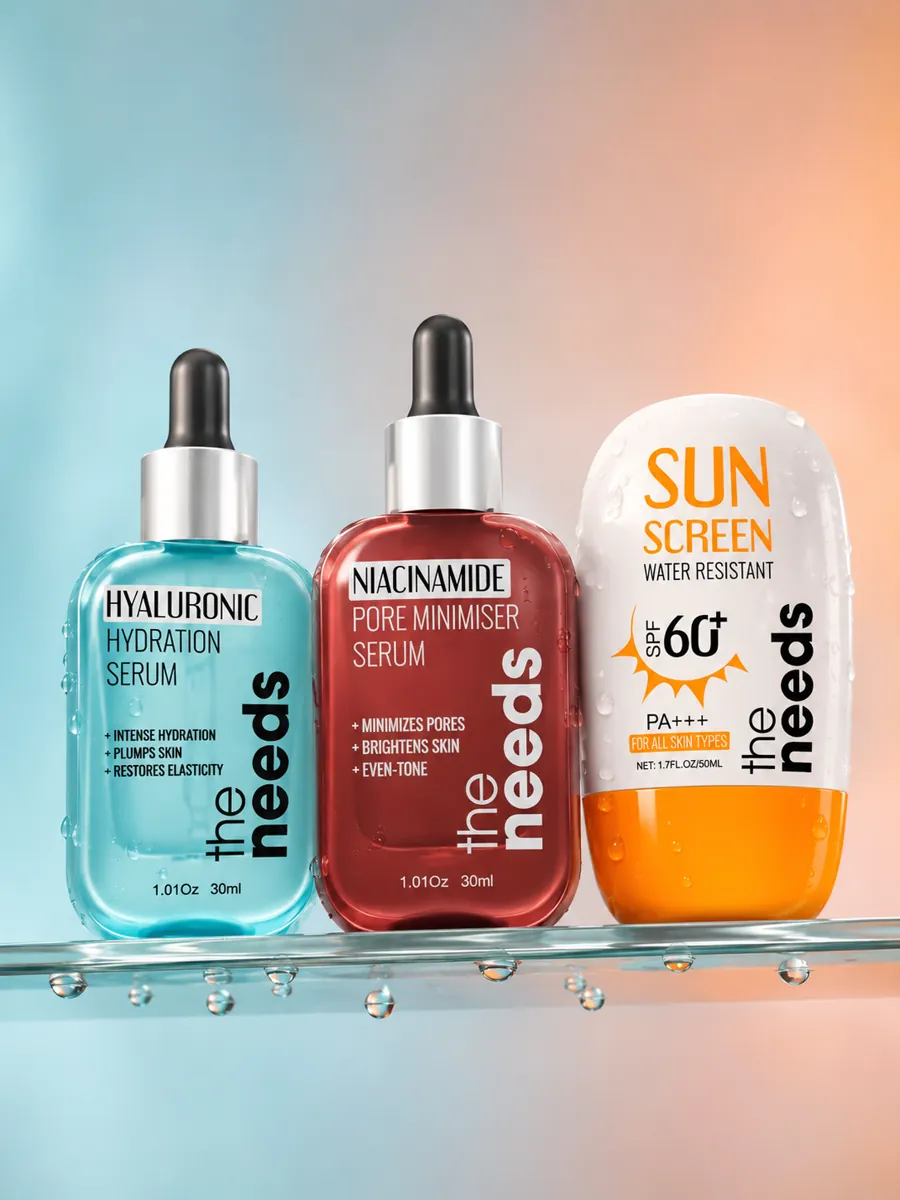
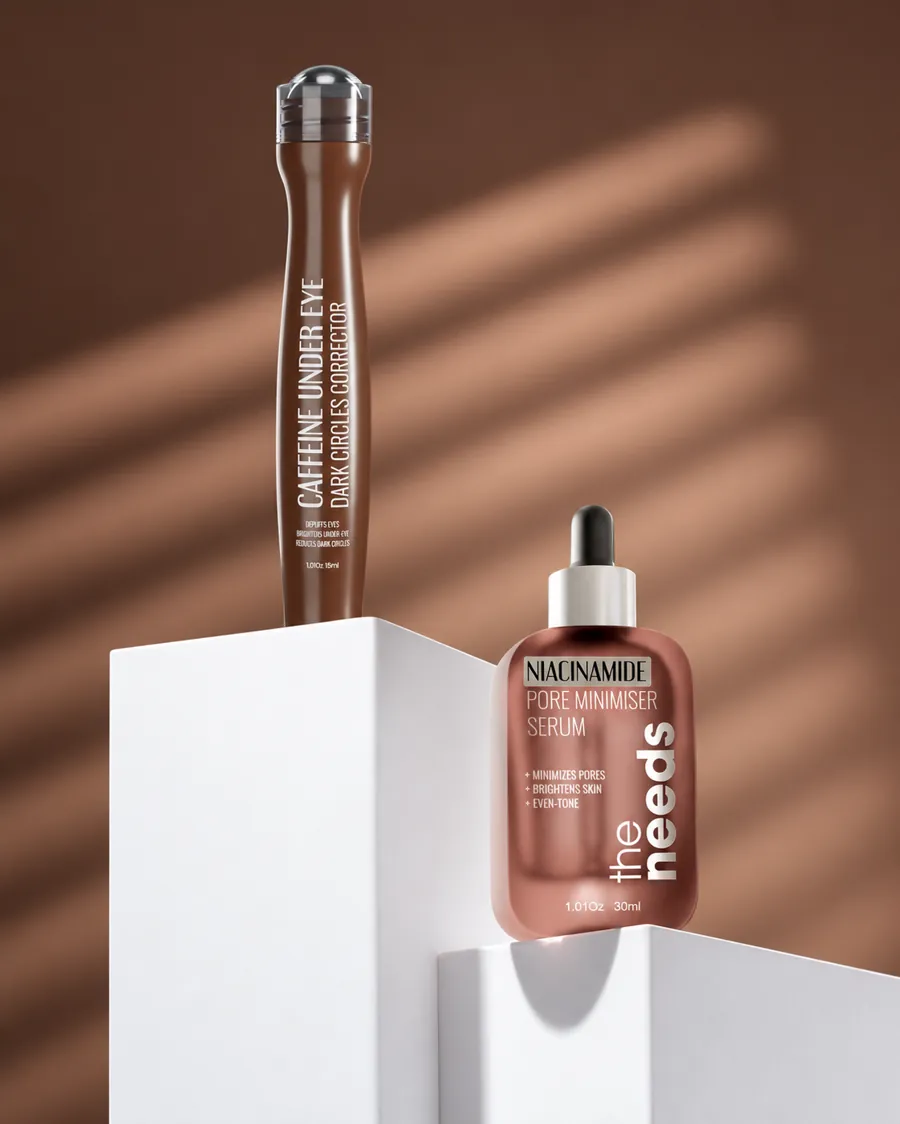
Our Niacinamide Serum 5% pairs niacinamide with sodium hyaluronate so oily skin is balanced without feeling stripped. Five percent is an effective, comfortable level for daily use; higher is not automatically better.
What vitamin C does
Vitamin C is an antioxidant. Its main roles are brightening and defending skin against the everyday stress of sun and pollution.
- Brightens: it helps dull skin look more radiant.
- Helps fade dark spots: it works on the look of sun marks and uneven patches over time.
- Antioxidant support: used under sunscreen, it adds a second line of defence against environmental stress.
- Supports smoother-looking skin: consistent use helps skin look firmer and more even in texture.
Pure vitamin C (L-ascorbic acid) is powerful but unstable and can sting. Our Vitamin C Brightening Serum uses 3-O-ethyl ascorbic acid, a more stable form, with niacinamide, ferulic acid and vitamin E for added antioxidant support - a practical choice for a hot climate where products are exposed to heat.
Which one should you choose?
Start with niacinamide if...
- your main concern is shine, visible pores or breakouts;
- your skin is sensitive or easily irritated;
- you want one gentle serum you can use morning and night.
Start with vitamin C if...
- your skin looks dull or tired;
- you have sun spots or uneven tone;
- you spend a lot of time outdoors or driving and want extra daytime defence.
If both lists describe you, you do not have to choose.
Can you use niacinamide and vitamin C together?
Yes. The old warning that the two cancel each other out came from early research using very different conditions from a modern serum on your face. Current formulas are designed to coexist, and our vitamin C serum already contains niacinamide. If your skin is sensitive, the simplest approach is to separate them by time of day.
Option 1: split by time of day
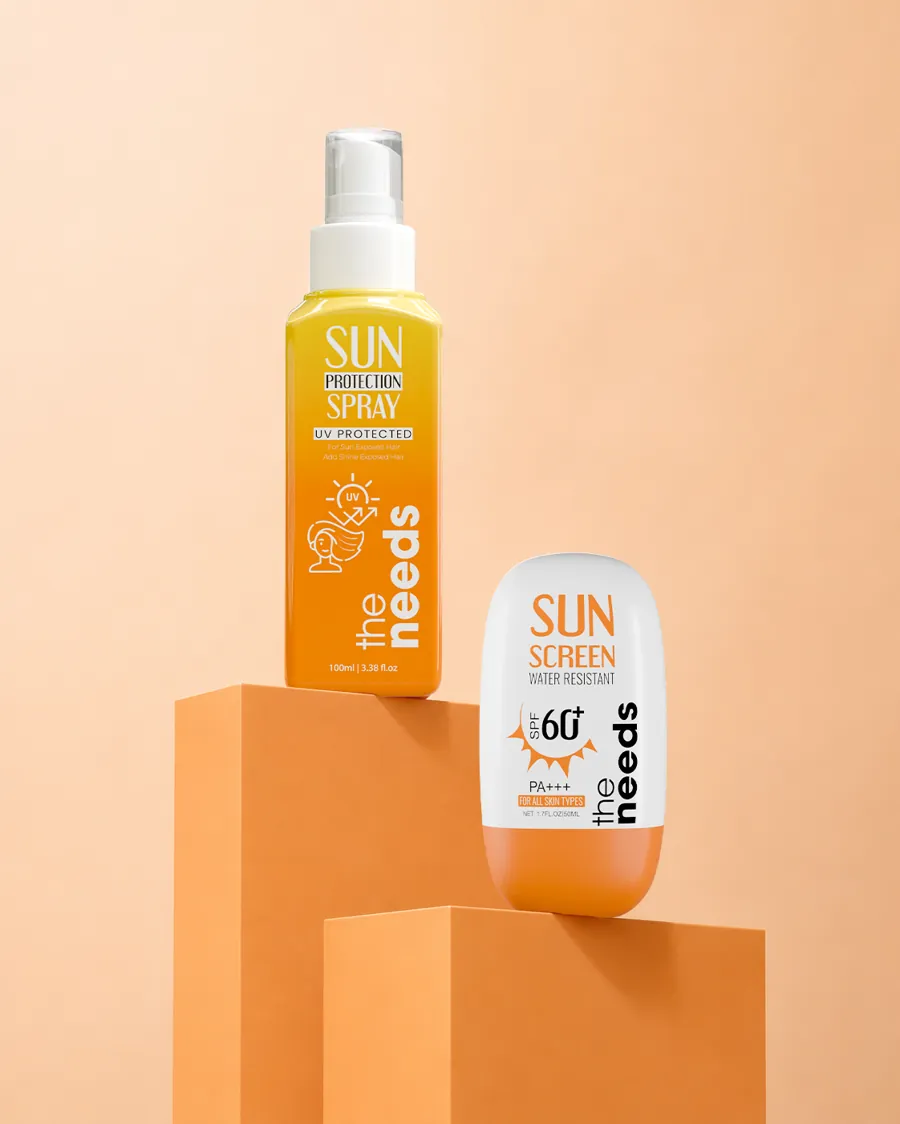
- Morning: cleanser, vitamin C serum, moisturiser, SPF 60+ sunscreen.
- Evening: cleanser, niacinamide serum, moisturiser.
Option 2: layer them in the morning
Apply vitamin C first on clean, dry skin, wait a minute, then apply niacinamide, followed by moisturiser and sunscreen. Thinnest texture first, thickest last, is a good general rule.
Pairing with other products
- Hyaluronic acid: pairs with both. A few drops of Hyaluronic Acid Serum before or after either serum adds hydration.
- Retinol: keep it for the evening. Vitamin C in the morning and Retinol Night Serum at night is a well-tested combination. Niacinamide can be used alongside retinol and may help skin feel more comfortable while it adjusts.
- Exfoliating acids: if you use salicylic or glycolic acid, avoid applying them in the same step as vitamin C to reduce the chance of irritation.
What to expect, and when
Niacinamide often shows its first results quickly - many people notice less shine within two to four weeks, with pores and marks improving over six to eight weeks. Vitamin C works more gradually; give it six to twelve weeks for brightness and dark spots. With either one, daily sunscreen is not optional: UV will undo progress on pigmentation faster than any serum can build it.
New to actives? Patch test on a small area for a couple of days and introduce one serum at a time. If you want both in a ready-made routine, the Hydration & Glow Trio combines hyaluronic acid, niacinamide and SPF 60+.
Questions & answers
Should I apply vitamin C or niacinamide first?
If you layer them in the same routine, apply vitamin C first on clean, dry skin, then niacinamide, then moisturiser and sunscreen. If your skin is sensitive, use vitamin C in the morning and niacinamide at night instead.
Can niacinamide or vitamin C cause purging?
Neither is an exfoliant, so true purging is unlikely. Some people feel mild tingling with vitamin C at first. If you notice persistent redness or bumps, reduce use to once a day or every other day, and stop if irritation continues.
Which is better for dark spots?
Both help. Vitamin C is the stronger choice for sun-related spots and overall brightness; niacinamide is excellent for post-breakout marks and redness. For stubborn marks, many people combine them with a targeted serum such as one with tranexamic acid, always alongside daily sunscreen.